
Animal Habitat Design, Wildlife Exhibits & Zoo Architecture
Designing meaningful relationships between animals, people and nature
LAM architects design animal habitats, wildlife exhibits, aviaries, visitor centres and immersive nature experiences where animal welfare, conservation, education and visitor experience come together.
Our work combines architecture, landscape, ecology and visitor experience to create meaningful environments that support animal welfare, natural behaviour and memorable experiences for both wildlife and people.
We believe successful habitat design emerges through collaboration with animal behaviour specialists, animal care specialists, ecologists, landscape architects, exhibit designers and engineers.
Within these multidisciplinary teams, specialist expertise in animal habitat design, wildlife exhibit design and immersive nature experience design helps translate animal welfare, ecology and visitor experience into meaningful and integrated design solutions.
Our experience includes projects such as the Savannah House, Arctica, the Zwin Aviary, the Vulture & Marabou Aviary and the Oostvaardersplassen Visitor Centre & Nature Museum.
Successful Habitat Design Begins with Understanding Natural Behaviour
Successful habitat and exhibit design begins with understanding natural behaviour.
Rather than starting with a building, we begin by studying how a species lives, moves and interacts with its environment. Habitat, landscape, climate, vegetation and behaviour together form the foundation of the design.
How does an animal move through its environment? Where does it seek shelter, rest, food or social interaction? What conditions allow it to thrive? And how can a habitat support these natural patterns of behaviour?
Our goal is to create environments that support animal welfare, encourage natural behaviour and reflect the ecological conditions in which a species would normally thrive.Every design decision is ultimately evaluated against its contribution to animal welfare, behavioural choice and long-term wellbeing.
At the same time, we carefully design the relationship between animals and visitors. Meaningful encounters are important, but never at the expense of animal welfare. By guiding visitor movement and experience, habitats can create opportunities for learning, wonder and connection while allowing animals to remain in control of their environment.
This approach benefits not only animals, but also visitors. Animals that can express natural behaviour are inherently more interesting to observe than animals that are constrained by environments designed primarily around buildings or visitor circulation.
Natural behaviour reveals the intelligence, social structures, movement patterns and unique characteristics of a species. It creates richer and more authentic experiences, fosters understanding and empathy, and strengthens the connection between people and nature.
The most memorable wildlife experiences occur when visitors feel they are observing animals on the animals’ terms, rather than watching them perform within a man-made setting.
Animal Habitat Design for Animal Welfare
Every species experiences its environment differently.
A giraffe uses space differently from a polar bear. Birds experience habitat differently from mammals. Some species seek shelter, while others seek visibility. Some thrive in social groups, while others require privacy and retreat.
For that reason, every project starts with understanding the specific needs of the species involved.
Rather than imposing a predetermined architectural language, we allow habitat requirements, animal welfare and ecological processes to shape the design.
Animal welfare is not simply one design objective among many. It forms the foundation from which the entire design evolves.
From spatial organisation and environmental enrichment to climate, vegetation, shelter and visitor interaction, every aspect of the habitat is considered through the lens of animal welfare and long-term wellbeing.
Wildlife Exhibit Design through Landscape Immersion
Modern wildlife exhibits are no longer collections of enclosures.
They are immersive environments that connect visitors with ecosystems.
Our approach is inspired by principles of landscape immersion, where habitat, landscape, architecture and visitor experience are designed as one integrated environment.
Light, vegetation, water, climate, topography and movement become part of the visitor experience while simultaneously supporting animal welfare.
The result is an environment that supports animal welfare and natural behaviour while creating meaningful and memorable experiences for visitors.
Immersive Nature Experience Design
We believe the most memorable places are those that create a genuine connection with nature.
Whether designing a wildlife park, aviary, visitor centre, nature museum or conservation attraction, our goal is to create experiences that encourage curiosity, understanding and emotional engagement.
Visitors should not simply observe nature.
They should feel part of it.
Our work ranges from animal habitats and wildlife exhibits to visitor centres, nature museums and immersive nature experiences. While project types may differ, they are connected by a shared ambition: creating environments that support wellbeing, strengthen relationships between people and nature, and contribute to quality of life for both wildlife and people.
The projects below illustrate how this philosophy has been applied across different species, landscapes, visitor experiences and conservation contexts.
Selected Projects
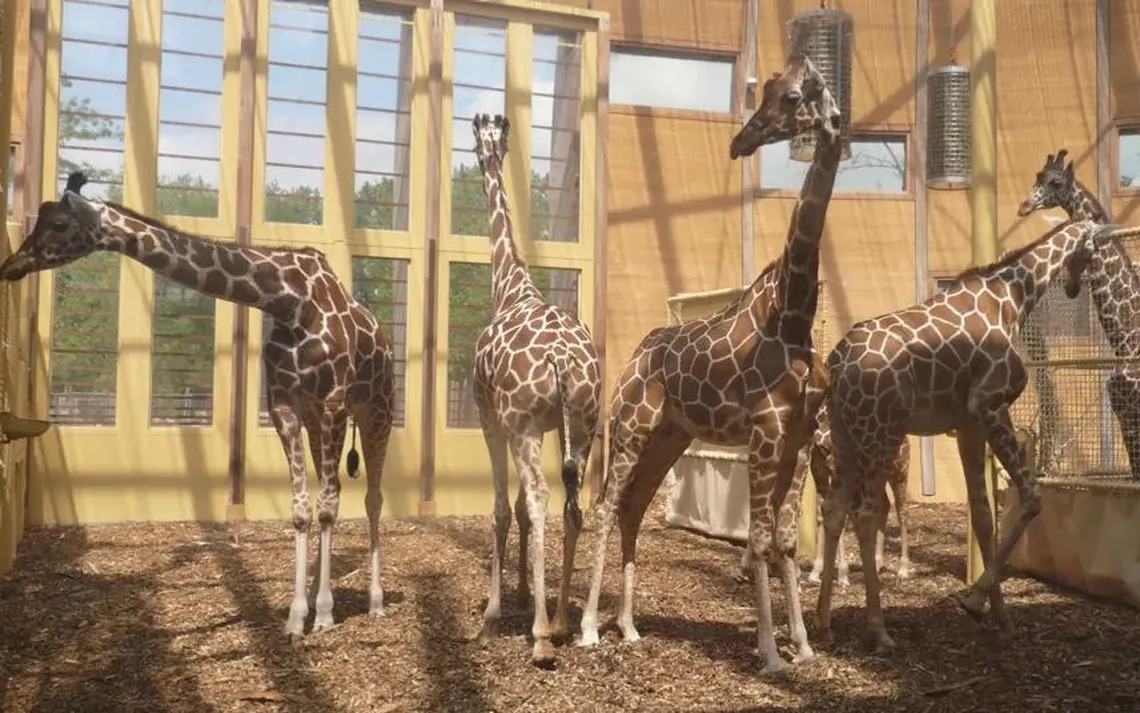
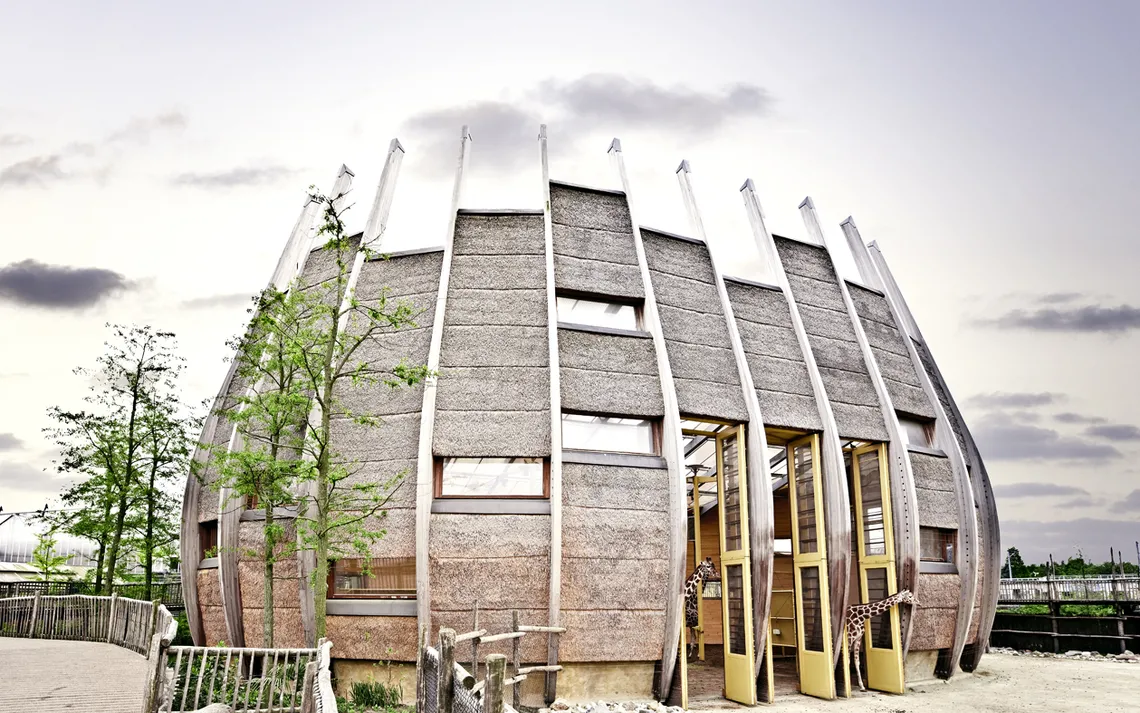
→ Savannah House – Giraffe Habitat & Animal Welfare Design
The Savannah House was designed as an immersive habitat where visitors come face to face with giraffes while experiencing the dynamics of a savannah-inspired environment. Animal welfare, natural behaviour, visitor engagement and educational value were developed as one integrated design concept.
→ Arctica – Polar Bear Habitat Design
Arctica combines animal welfare, landscape immersion and visitor experience within a large-scale polar bear habitat. Visitors can experience polar bears both above and below water, creating a powerful connection between people and wildlife.
→ Zwin Aviary – Bird Habitat & Nature Experience Design
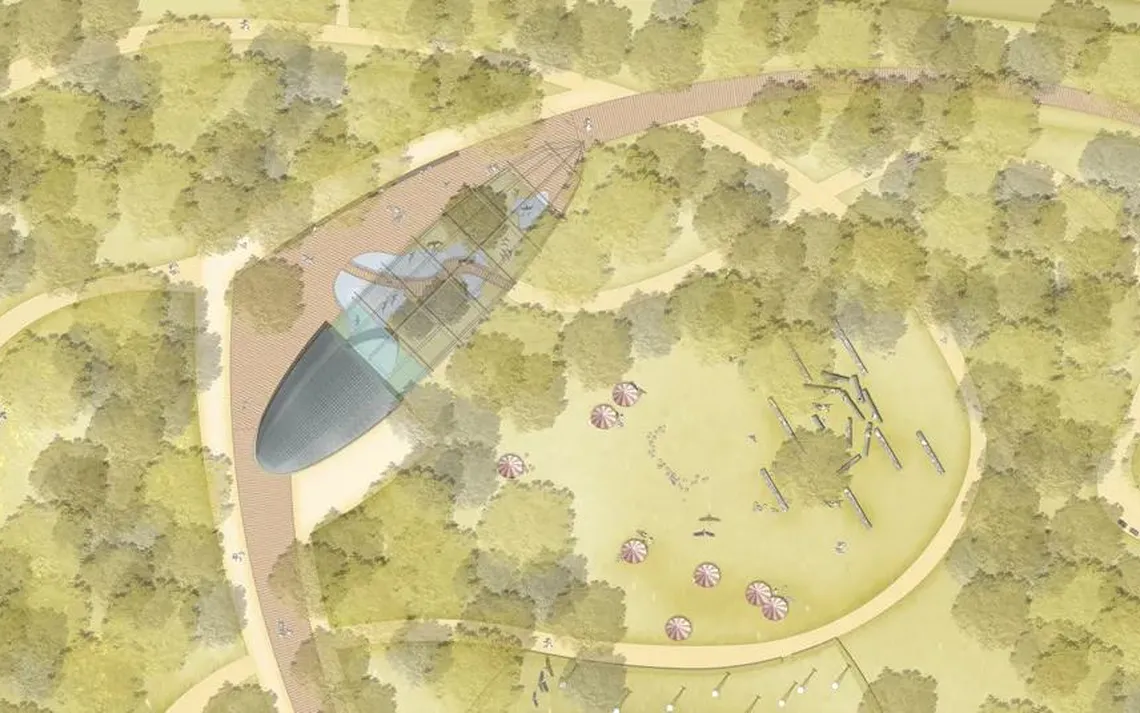
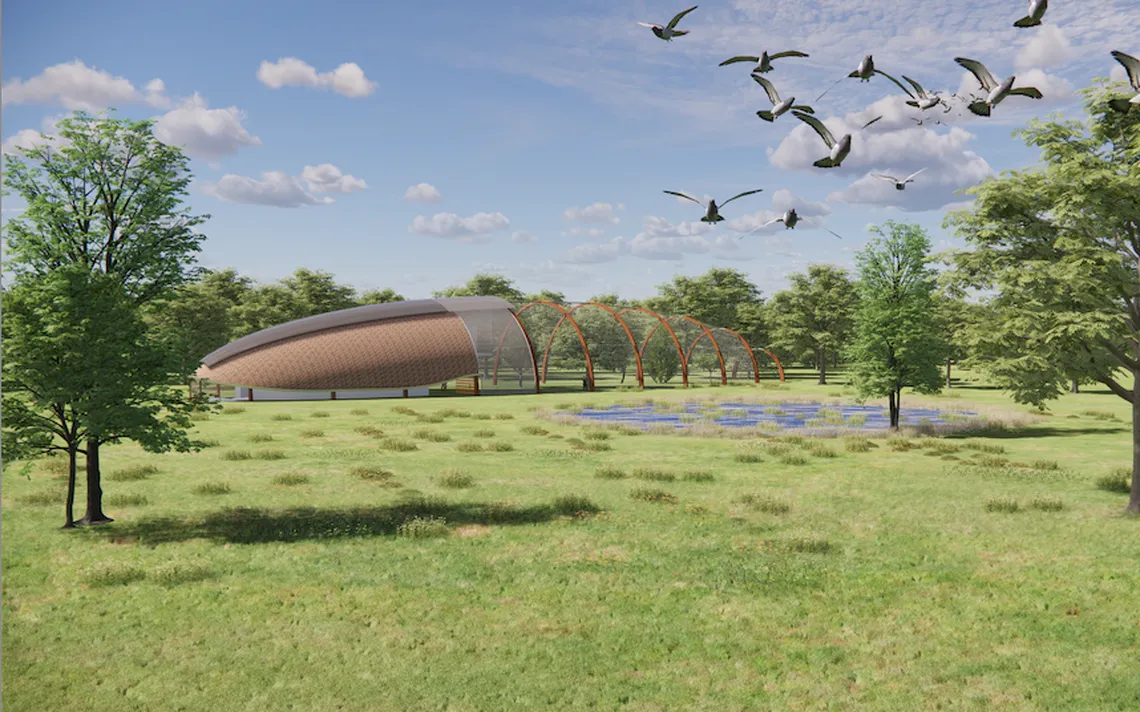
Located within one of Europe’s most important bird migration landscapes, the Zwin Aviary was designed as a biobased and largely self-sufficient habitat where visitors can observe characteristic bird species without disturbing the sensitive nature reserve, while supporting animal welfare and species-specific behaviour
→ Vulture & Marabou Aviary – Immersive Aviary Design
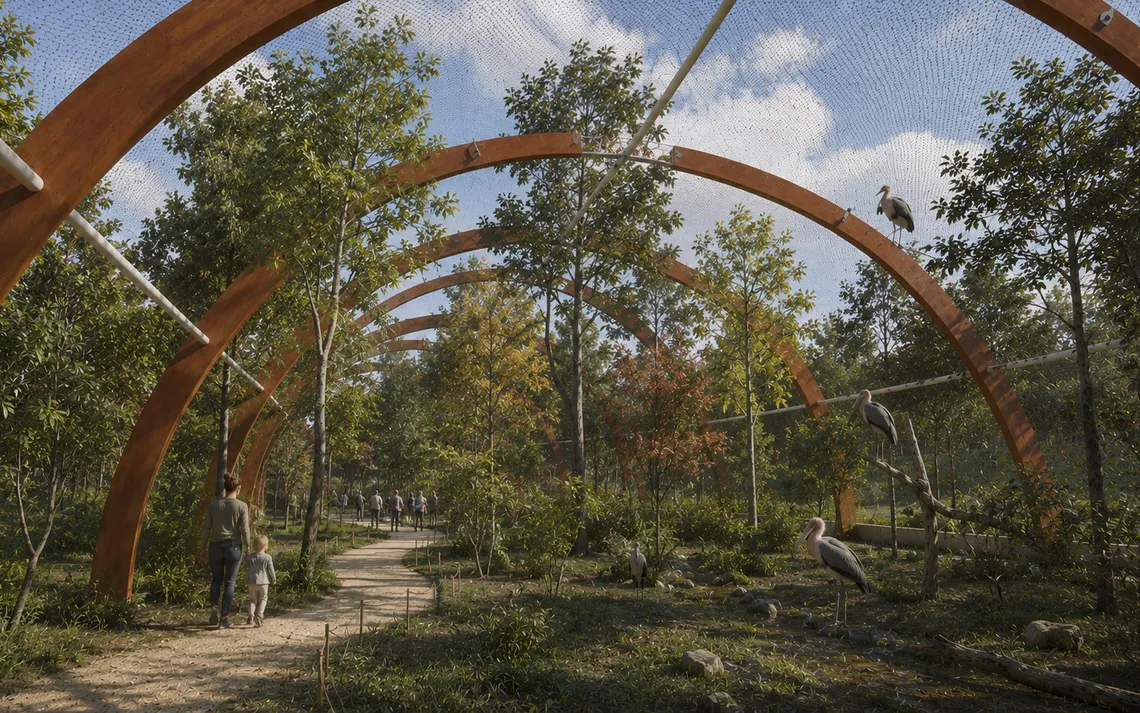
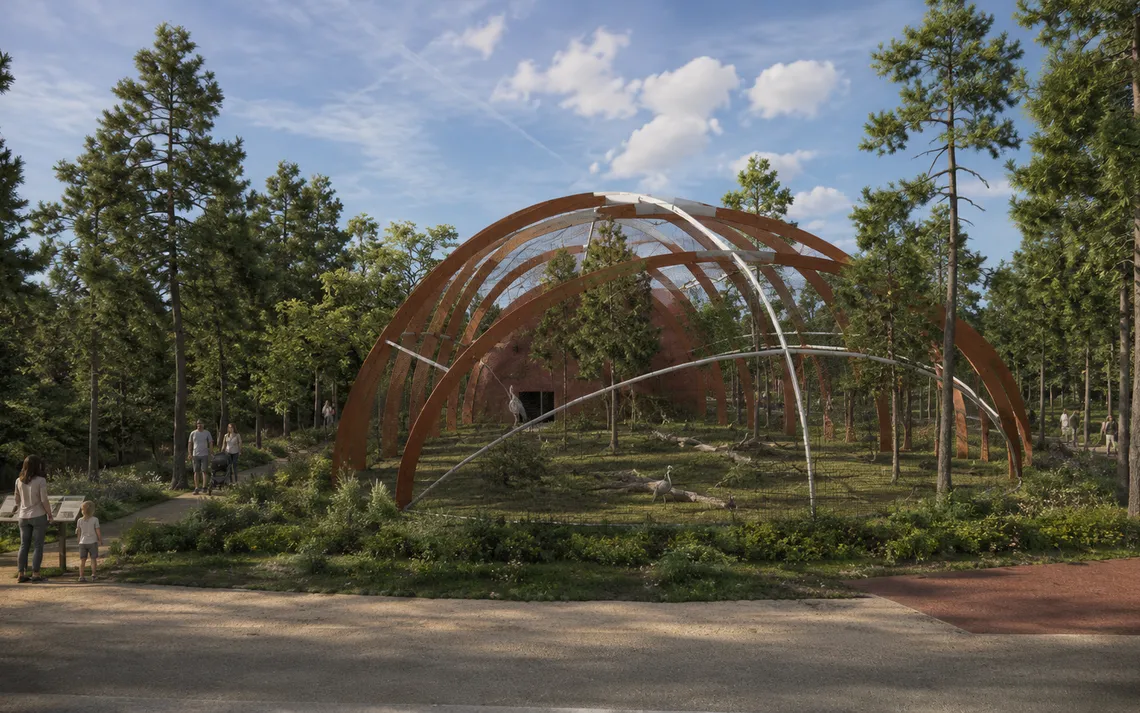
This immersive aviary allows visitors and birds to share a single landscape experience. The design focuses on flight space, natural behaviour, landscape immersion and meaningful encounters between visitors and wildlife.
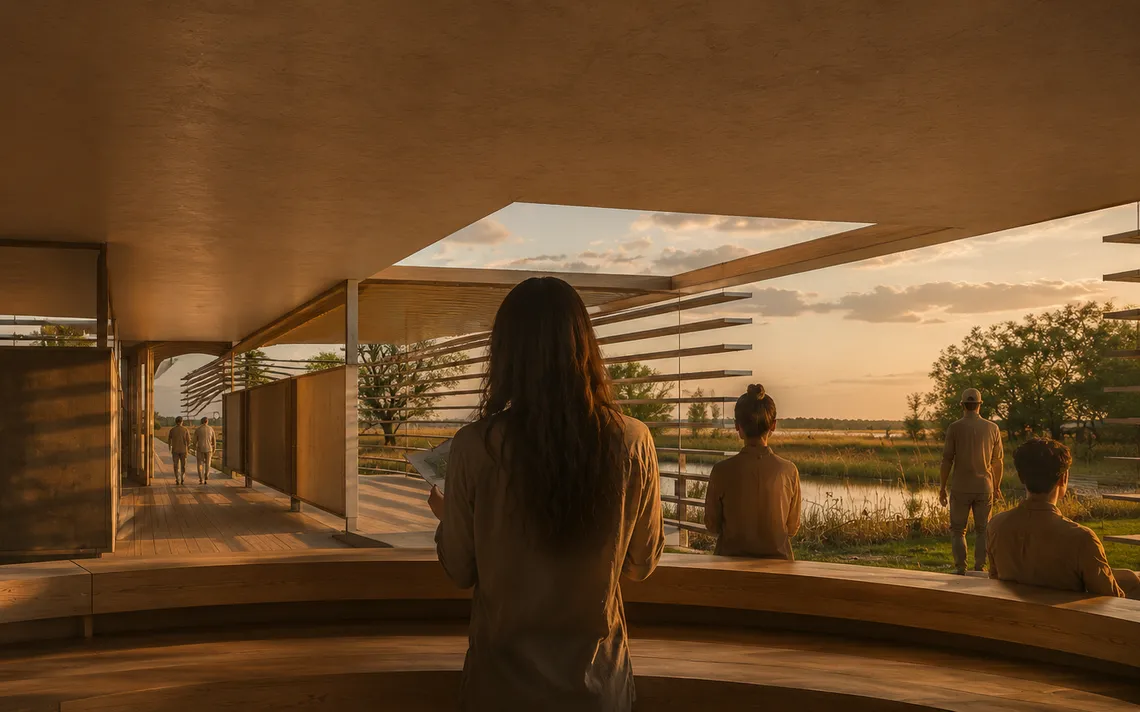
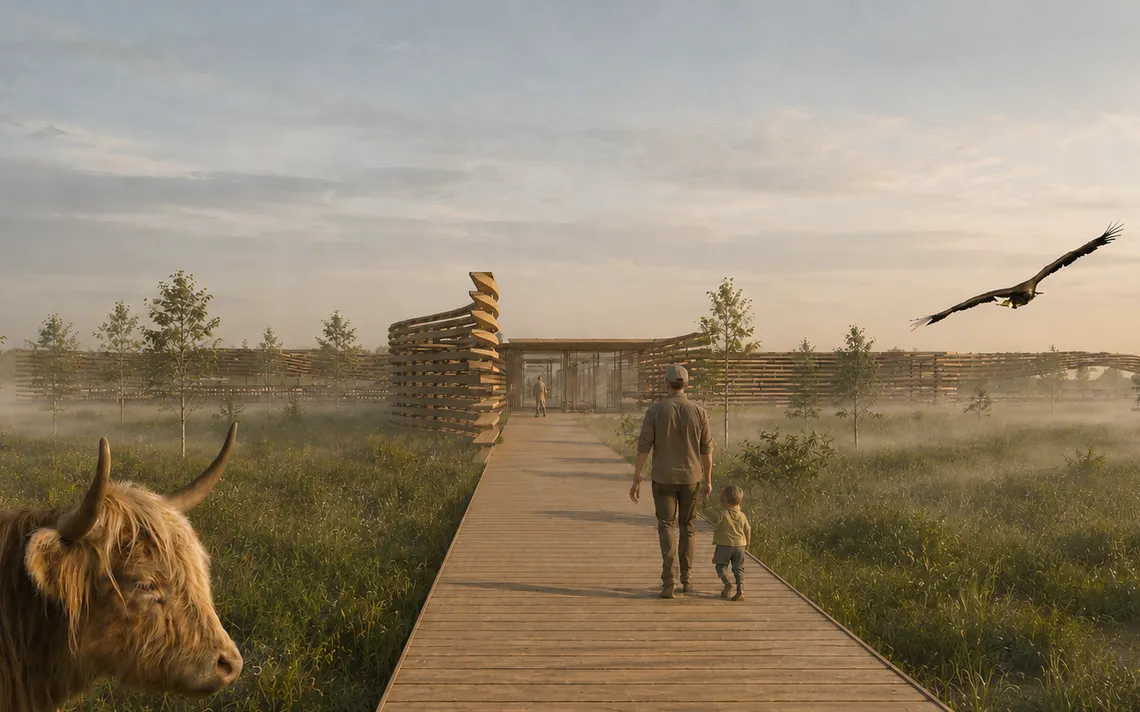
→ Oostvaardersplassen Visitor Centre & Nature Museum – Nature Experience Design
Designed as an immersive nature experience, the visitor centre and nature museum combine architecture, ecology and landscape into a single environment that strengthens education, awareness and connection with nature.
Conservation-Focused Architecture
Today, zoos, wildlife parks, nature reserves and visitor centres play an increasingly important role in conservation, education and environmental awareness.
Architecture can support these ambitions.
By combining animal welfare, ecological thinking, visitor engagement and educational storytelling, buildings become active contributors to conservation goals rather than passive containers for exhibits.
This approach allows architecture to support both biodiversity and public awareness.
Visitor Experience, Education and Engagement
A successful habitat does more than house animals.
A successful visitor centre does more than provide information.
Both tell a story.
Carefully designed routes, framed views, moments of discovery and opportunities for observation help visitors engage with animals, landscapes and ecosystems in meaningful ways.
Through immersive experiences, interpretation and education, architecture can contribute to a deeper understanding of nature and humanity's place within it.
Biophilic Design and Natural Processes
Nature is constantly changing.
Light shifts throughout the day. Vegetation grows and evolves. Seasons transform landscapes. Ecosystems adapt over time.
Our work embraces these natural processes rather than resisting them.
Inspired by principles of Biophilic Design, we create environments that strengthen connections between people and nature while supporting health, wellbeing and ecological resilience.
Sustainable and Future-Oriented Design
Sustainability is not an addition to the design process.
It is part of the design process itself.
Biobased materials, circular design principles, passive climate strategies, ecological integration and long-term adaptability are considered from the earliest stages of every project.
Projects such as the Zwin Aviary and the Oostvaardersplassen Visitor Centre demonstrate how sustainability, conservation and visitor experience can reinforce one another.
Expertise
Our expertise includes:
- Animal Habitat Design Consultancy
- Wildlife Exhibit Design Consultancy
- Zoo Architecture
- Aviary Design
- Immersive Nature Experience Design
- Conservation Architecture
- Visitor Experience Design
- Nature Centre Design
- Nature Museum Design
- Wildlife Park Design
- Conservation Visitor Centres
- Biophilic Design
Architecture for Quality of Life
At LAM architects, animal habitat design, wildlife exhibit design and nature experience design are part of a broader philosophy: Architecture for Quality of Life.
We believe architecture should do more than provide shelter or accommodate functions. It should support wellbeing, encourage meaningful relationships and strengthen connections between people, nature and the living world around them.
Whether designing an animal habitat, a visitor centre, a nature museum or a place for everyday life, we seek to create environments that contribute positively to health, wellbeing, experience and long-term quality of life.
For us, animal welfare, visitor experience, ecology and architecture are not separate ambitions. They are interconnected aspects of a single design challenge: creating places where people, animals and nature can thrive together.
International Collaboration
Successful habitat and nature experience projects rely on the combined expertise of many disciplines.
LAM architects specialises in Animal Habitat Design, Wildlife Exhibit Design and Nature Experience Design and is accustomed to working as part of multidisciplinary design teams.
Rather than leading large multidisciplinary teams, we typically contribute as specialist design partners, bringing specialist expertise in animal welfare-driven habitat design, visitor experience and immersive nature experiences to broader project teams.
We collaborate with landscape architects, engineers, structural consultants, ecologists, animal care specialists, educators, exhibition designers and visitor experience specialists to create integrated and meaningful environments for people and wildlife.
For international projects, we regularly work alongside local architects, engineering firms and technical consultants. This approach combines local knowledge, regulations and technical expertise with our specialist experience.
We believe this collaborative model delivers the best of both worlds: locally grounded projects enriched by specialist international expertise.
Frequently Asked Questions About Habitat Design
What is Animal Welfare Design?
Animal Welfare Design is an approach in which animal welfare forms the foundation of the design process. Habitat layout, climate, enrichment, vegetation, shelter and visitor interaction are all developed to support natural behaviour, behavioural choice and long-term wellbeing.
What is the difference between Zoo Architecture and Animal Habitat Design?
Zoo Architecture focuses on the design of zoological facilities and visitor infrastructure. Animal Habitat Design focuses on creating environments that support animal welfare, natural behaviour and ecological function. In successful projects, architecture, habitat and landscape are developed as one integrated system.
What is Animal Habitat Design?
Animal Habitat Design is the creation of environments that support animal welfare, natural behaviour and long-term wellbeing while providing meaningful experiences for visitors.
What is Wildlife Exhibit Design?
Wildlife Exhibit Design combines habitat design, landscape immersion, visitor experience and conservation goals into integrated environments for animals and people.
Why is animal welfare important in habitat design?
Animal welfare forms the foundation of successful habitat design. Animals that can express natural behaviour tend to experience higher levels of wellbeing, while visitors gain a more authentic understanding of the species and its ecology.
What is landscape immersion?
Landscape immersion is a design approach in which habitat, landscape, architecture and visitor experience are developed as one integrated environment.
Who designs animal habitats?
Successful habitats are typically developed through collaboration between animal behaviour specialists, animal care specialists, ecologists, landscape architects, exhibit designers and architects with expertise in animal habitat design.
Let's Talk
Every habitat tells a story.
Every landscape offers opportunities for connection, learning and conservation.
Whether you are developing a wildlife exhibit, aviary, visitor centre, nature museum or immersive nature experience, LAM architects can help translate your ambitions into a meaningful and future-oriented design.
Let's explore how architecture, ecology and visitor experience can come together in your project.
Ready to discuss your project? Call +31 (0)318 41 81 85 or use our contact form. We'd be delighted to explore your ambitions, opportunities and challenges in an informal introductory conversation.
Explore Further
→ Architecture for Quality of Life